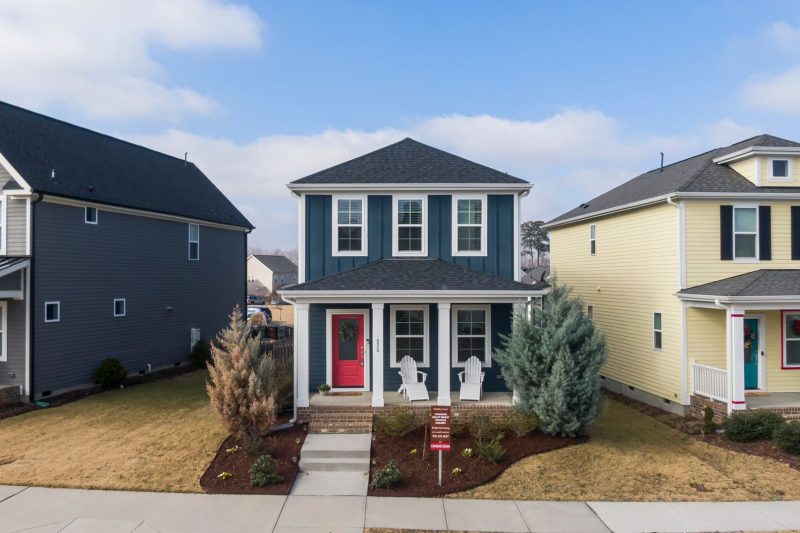
How We Help Buyers Choose Between Conventional, FHA, and VA Loans

Choosing between conventional, FHA, and VA financing can be difficult when each option has different requirements, costs, and long-term tradeoffs. Conventional, FHA, and VA loans are mortgage programs with different standards for credit, down payment, mortgage insurance, military eligibility, and property approval. In this guide, we’ll explain how we compare these programs and help buyers decide which structure fits their financial situation and overall plan.
Key Takeaways
- Conventional: Often works well for buyers with established credit who want flexible property options and potentially removable mortgage insurance.
- FHA: Allows a 3.5% minimum down payment and commonly offers more flexibility around credit history and debt-to-income ratios.
- VA: May provide eligible service members, veterans, and surviving spouses with 0% down financing and no monthly mortgage insurance.
- Comparison: The right choice depends on eligibility, available funds, credit, monthly payment, property type, and how long the buyer expects to keep the loan.
At Green Haven Capital Inc. (NMLS# 173062), we compare loan programs before recommending a direction. We look at the full payment, cash needed at closing, qualification requirements, property details, and the buyer’s longer-term plans.
Quick Answers
- Which loan usually requires the least money down? VA financing may allow 0% down for eligible borrowers. Some conventional programs allow 3% down, while FHA generally requires at least 3.5%.
- Do conventional loans require perfect credit? No. Conventional loans have credit requirements, but the available terms depend on the full application, including credit history, income, assets, and debt.
- Does FHA mortgage insurance go away? It depends on the original down payment and current program rules. In some cases, FHA mortgage insurance remains for the life of the loan unless the borrower refinances.
- Is VA financing only for first-time buyers? No. Eligible borrowers may use VA financing more than once, subject to entitlement and current program guidelines.
The Main Differences Between Conventional, FHA, and VA Loans
These programs can all be used to purchase a primary residence, but they evaluate risk differently. That affects the down payment, mortgage insurance, appraisal standards, pricing, and documentation.
Here’s what actually matters: the program with the smallest down payment isn’t automatically the right loan. A lower upfront investment may come with different monthly costs, property restrictions, or long-term expenses.
| Feature | Conventional | FHA | VA |
|---|---|---|---|
| Minimum down payment | As low as 3% for certain qualified buyers and programs | Generally 3.5% | May be 0% with sufficient eligibility and entitlement |
| Eligibility | Available to qualified borrowers | Available to qualified borrowers using an eligible primary residence | Limited to eligible service members, veterans, and certain surviving spouses |
| Mortgage insurance | Usually required with less than 20% down and may later be removed if requirements are met | Includes upfront and annual mortgage insurance under current guidelines | No monthly mortgage insurance, but a funding fee may apply |
| Property use | Primary homes, second homes, and investment properties, depending on the program | Primary residences | Primary residences |
| Property review | Standard appraisal and property eligibility requirements | Additional health, safety, and property condition standards may apply | VA minimum property requirements apply |
Program guidelines, lender overlays, fees, and loan limits can change. We verify the current requirements for the borrower, property, and county before building the comparison.
When a Conventional Loan May Make Sense
A conventional loan isn’t backed by a government agency. Most conforming conventional loans follow guidelines established by Fannie Mae or Freddie Mac, although individual lenders may add their own requirements.
Conventional financing often works well for buyers with established credit, stable qualifying income, and enough funds to cover the down payment and closing costs. It can also provide more flexibility for second homes, investment properties, and certain property types.
Some qualified first-time buyers and other eligible borrowers may have access to a 3% down conventional option. Putting less than 20% down will commonly require private mortgage insurance, but that insurance may be removable once applicable equity and payment-history requirements are met.
Credit score, down payment, occupancy, property type, and debt-to-income ratio can all affect conventional loan pricing. Two buyers using the same program may receive different terms because their overall risk profiles are different.
Why buyers may choose conventional financing
- Mortgage insurance may be removable under current guidelines.
- It can finance primary residences, second homes, and investment properties.
- Property standards may be more flexible than FHA or VA requirements in certain situations.
- It may offer competitive terms for borrowers with stronger credit profiles.
When an FHA Loan May Make Sense
FHA loans are insured by the Federal Housing Administration and are used for eligible primary residences. They’re not limited to first-time buyers, although they’re often considered by buyers who need more flexibility around credit, down payment, or debt-to-income ratios.
FHA financing generally allows a minimum down payment of 3.5% for borrowers who meet the applicable credit and underwriting requirements. Buyers may also be able to use eligible gift funds or approved assistance toward the transaction.
FHA loans include both upfront and annual mortgage insurance. The cost and duration depend on current rules, the original loan structure, and the down payment. That’s why we compare more than the starting payment.
A buyer may qualify more comfortably with FHA today but pay more in mortgage insurance over time. Another buyer may find that conventional financing requires slightly more cash or a different payment upfront but creates more flexibility later.
Buyers considering this option can review our Sacramento FHA home loan overview for more information about the broader program.
FHA property standards can affect the transaction
An FHA appraisal addresses value and certain property conditions. Issues involving safety, security, or structural soundness may need to be corrected before the loan can close.
This can matter when looking at older homes in Sacramento County, Elk Grove, Stockton, or other Northern California markets. The property may still be financeable, but repairs and timing should be evaluated before the buyer commits to a particular loan structure.
When a VA Loan May Make Sense
VA loans are guaranteed by the U.S. Department of Veterans Affairs and are available to eligible service members, veterans, and certain surviving spouses. The borrower must meet VA eligibility requirements and the lender’s underwriting standards.
VA financing may allow an eligible borrower to purchase a primary residence with no down payment and no monthly mortgage insurance. A VA funding fee commonly applies, although some borrowers are exempt based on current VA rules.
The absence of monthly mortgage insurance can create a meaningful payment difference. However, we still compare the funding fee, interest rate, closing costs, seller credit structure, and expected time in the home.
VA loans also include occupancy rules and minimum property requirements. Eligibility for the benefit doesn’t automatically mean every property or loan amount will qualify. Buyers can find a broader program explanation on our Sacramento VA home loan page.
How We Compare the Three Programs
We don’t start by asking which program has the most recognizable benefit. We start with the buyer’s full financial picture and work backward from the purchase plan.
1. We review eligibility and qualification
We look at credit history, qualifying income, employment or business history, assets, monthly debts, occupancy, and property type. For VA financing, we also review the borrower’s Certificate of Eligibility and available entitlement.
Agency guidelines establish the general framework, but lenders can apply additional overlays. A program may permit a scenario while a specific lender has a more restrictive requirement. Working with multiple lenders gives us more room to compare how the file may be evaluated.
2. We calculate the full monthly payment
The mortgage payment is more than principal and interest. We also account for property taxes, homeowners insurance, mortgage insurance when required, and homeowners association dues if applicable.
Property taxes in Sacramento County, Placer County, and surrounding areas can vary based on the specific property and local assessments. Insurance and association costs can also change the qualification and monthly budget.
3. We compare cash needed at closing
Down payment is only one part of the upfront cost. Buyers may also need funds for closing costs, prepaid taxes, homeowners insurance, escrow reserves, inspections, and other transaction expenses.
Seller credits, lender credits, gift funds, and approved assistance may reduce how much a buyer brings to closing, but every program treats those funds differently. Buyers who need help with the upfront investment may also want to review available down payment assistance loan options.
4. We look at the property and offer strategy
The property can influence the loan decision just as much as the borrower’s financial profile. Condominiums, multi-unit properties, homes needing repairs, and higher-priced homes may each have separate eligibility requirements.
In Sacramento, the well-priced homes don’t sit long. A pre-approval should be structured before an offer is submitted so the buyer and real estate agent understand the financing terms, appraisal requirements, and available cash.
5. We consider the longer-term plan
The strategy behind the loan matters just as much as the rate. We ask how long the buyer expects to own the property, whether additional cash needs to remain available after closing, and whether refinancing may become part of the plan later.
A buyer putting less down may preserve cash for reserves, repairs, or other financial priorities. A larger down payment may reduce the monthly payment and mortgage insurance. Neither approach is automatically right for every borrower.
A Lower Down Payment Isn’t the Only Goal
Most buyers understandably focus on how much they need upfront. But the loan also needs to work after closing.
We compare the total payment, mortgage insurance structure, upfront fees, reserve position, and potential exit strategy. If one option saves cash today but creates a meaningfully higher long-term cost, we explain that tradeoff clearly.
The same is true in reverse. Paying more upfront isn’t always the stronger strategy if it leaves the buyer without adequate reserves. The right structure should balance qualification, monthly affordability, and available funds.
Choosing a Loan for Sacramento and Northern California Properties
Local property values and housing types can affect which program works. Conforming loan limits vary by county, and a purchase in the Roseville real estate market may need a different structure than a lower-priced property in the Stockton housing market.
Condominium approval, homeowners association documentation, appraisal conditions, insurance availability, and property taxes can also influence the decision. These details should be reviewed early, especially for buyers comparing Sacramento, Placer County, El Dorado County, Yolo County, and San Joaquin County.
We’ll walk through the options so you can see what actually makes sense. That includes showing the payment and cash-to-close differences side by side instead of selecting a program based on one feature.
Review Your Options Before You Make an Offer
If you’re deciding between conventional, FHA, and VA financing, we can review your scenario and compare the programs based on current guidelines. We’ll look at qualification, monthly payment, upfront funds, property eligibility, and how the loan fits into your overall plan.
Call, text, or email us to discuss pre-approval planning and next steps. The earlier we review the details, the more clearly you can evaluate properties and structure an offer with the financing already mapped out.
Frequently Asked Questions
Can I change loan programs after I’m pre-approved?
Yes, a loan program can often be changed before closing, but the file must be reviewed under the new program’s requirements. The change may affect the appraisal, mortgage insurance, cash needed, interest rate, and closing timeline.
Can conventional, FHA, and VA loans finance a multi-unit property?
These programs may finance eligible multi-unit properties when the borrower occupies one unit as a primary residence, subject to program rules. Conventional financing may also be available for non-owner-occupied multi-unit properties, but down payment and reserve requirements are typically different.
What happens if the appraisal identifies property repairs?
The required response depends on the loan program, the nature of the issue, and the appraiser’s comments. FHA and VA loans may require certain repairs before closing, while conventional treatment can vary based on whether the condition affects safety, soundness, or marketability.
Can a self-employed buyer use conventional, FHA, or VA financing?
Yes, self-employed buyers may qualify for any of these programs if their income can be documented under the applicable guidelines. Lenders commonly review tax returns, business income, ownership percentage, and the stability of earnings, although documentation varies by scenario.
How do county loan limits affect the program comparison?
Conforming and FHA loan limits vary by county and are updated periodically. If the requested loan exceeds an applicable limit, the buyer may need a larger down payment or a different loan structure, depending on the property and current guidelines.

Kevin Oto
With over 20 years of experience, Kevin has established himself as one of Northern California’s most trusted mortgage advisors — helping homebuyers, homeowners, and real estate investors secure financing with clarity, confidence, and competitive pricing in any market.
Related Posts