
Buying an investment property can make sense financially, but qualifying becomes more complicated when the…
What We Consider When Financing an Investment Property
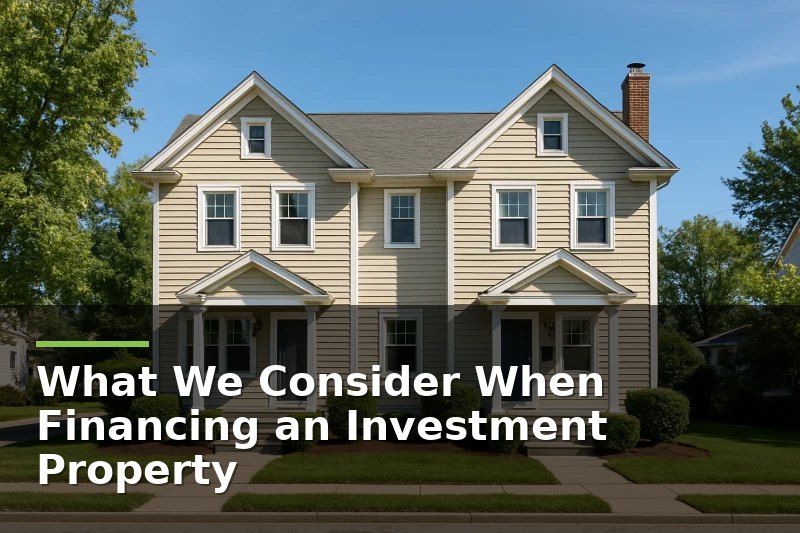
Buying an investment property can look straightforward until you start comparing the down payment, rental income, reserves, and loan structure. Financing an investment property requires the lender to evaluate both the borrower’s financial profile and the property’s expected performance, with guidelines that are typically different from a primary residence. At Green Haven Capital Inc. (NMLS# 173062), we’ll walk through the main factors we review, the loan options available, and how the property fits into your overall plan.
Key Takeaways
- Property: The property type, condition, occupancy, market rent, and number of units can all affect financing.
- Qualification: Lenders commonly review credit, income, existing debts, down payment, and post-closing reserves.
- Rental Income: Current or projected rent may help with qualification, but the amount lenders can use depends on documentation and program guidelines.
- Loan Structure: The right option depends on your cash flow, expected holding period, available liquidity, and broader investment plan.
Quick Answers
- Are investment property loans priced differently? Generally, yes. Investment properties are viewed as higher risk than primary residences, so rates, fees, and down payment requirements are commonly different.
- How much down payment is required? It varies based on the loan program, property type, number of units, credit profile, and other factors. A larger down payment may improve the available structure.
- Can projected rent help you qualify? Often, yes. The lender may use a percentage of documented market rent or an existing lease, subject to current guidelines.
- Should financing be reviewed before making an offer? Yes. An early review helps clarify your price range, cash requirements, documentation, and potential loan options before you write an offer.
We Start With the Property and the Investment Plan
Here’s what actually matters: we’re not only looking at whether a loan can be approved. We’re looking at whether the financing supports the way you plan to own and operate the property.
A long-term rental in Sacramento may call for a different structure than a property you plan to renovate, reposition, or sell. The same applies if you’re comparing a single-family rental in Elk Grove with a duplex in West Sacramento or a higher-priced property in Roseville.
We typically start with a few practical questions:
- Will the property be held as a long-term rental, short-term rental, or another permitted use?
- How long do you expect to keep it?
- Does the property currently have tenants?
- Will you manage it directly or use professional management?
- How much liquidity do you want to retain after closing?
- Are you focused primarily on monthly cash flow, appreciation, tax planning, or portfolio growth?
These answers help us compare the available Sacramento investment property loan options without treating every purchase the same way.
Borrower Qualification Still Matters
For a conventional investment property loan, lenders generally review the same core areas they would review on other mortgages. The standards may be tighter because the property isn’t your primary residence.
Credit Profile
Credit can affect eligibility, pricing, down payment expectations, and the number of financed properties allowed under a program. The lender may review your credit score along with payment history, revolving balances, mortgage history, and recent credit activity.
A credit score is only one part of the file. A borrower with strong income and assets may still need a different structure if there are recent late payments, high balances, or multiple financed properties.
Income and Employment
For standard conventional financing, lenders commonly document income through tax returns, W-2s, pay stubs, or other applicable records. Self-employed borrowers may need business and personal tax documents, year-to-date financial information, and additional support for business income.
Income calculations don’t always match the amount deposited into your bank account. Underwriting guidelines determine which income can be counted, how variable income is averaged, and whether certain deductions or expenses affect qualifying income.
Existing Debts
The lender will generally include current housing payments, installment loans, revolving debt, and other required obligations when calculating debt-to-income ratios. If you already own rental properties, those properties may also be reviewed individually.
Documentation may include mortgage statements, insurance, property tax information, leases, and tax returns. The goal is to determine how each property affects your overall monthly obligations.
Cash Reserves
Cash reserves are funds remaining after the down payment and closing costs are paid. Lenders may require reserves to account for vacancies, repairs, and unexpected expenses.
Reserve requirements vary based on the program, number of financed properties, property type, and overall risk profile. Eligible assets may include checking and savings accounts, certain investment accounts, and other approved sources. Retirement funds may be treated differently depending on access and lender guidelines.
How Rental Income Is Evaluated
Rental income can be a major part of investment property qualification, but lenders generally don’t use the full monthly rent. A portion is commonly set aside to account for vacancy and operating expenses.
The documentation depends on the property and transaction:
- Purchase with no current tenant: The appraisal may include a market rent analysis prepared by the appraiser.
- Purchase with an existing tenant: The lender may review the lease, payment history, appraisal rent schedule, and other supporting records.
- Property already owned: Tax returns, leases, and current housing expenses may be used to calculate net rental income.
- Short-term rental: Income treatment varies significantly by program and may require a non-QM option.
Borrower eligibility and property income are separate issues. A property may produce enough rent to cover its expenses, but the borrower must still meet the applicable credit, asset, and documentation guidelines for the selected program.
Property Type and Condition Can Change the Loan
A standard one-unit property is usually evaluated differently from a two- to four-unit building, condominium, mixed-use property, or property with significant deferred maintenance. The lender must confirm that the property fits the loan program in addition to confirming that the borrower qualifies.
The appraisal generally addresses value, marketability, condition, and expected market rent. Health and safety issues, incomplete construction, or major repairs can create additional requirements. A property intended for conventional financing commonly needs to be suitable for occupancy at closing.
Condominiums may involve another level of review. The lender could evaluate the project’s insurance, owner occupancy, commercial space, litigation, budget, and other project details. These requirements can come from the loan program, the investor purchasing the loan, or an individual lender’s overlay.
Program requirements and lender overlays aren’t always the same. A property may meet broad agency guidelines but still fall outside a particular lender’s requirements. This is one reason we compare the full scenario rather than relying on a single guideline.
Comparing Common Investment Property Loan Structures
There’s usually more than one way to approach this. The right structure depends on your documentation, property cash flow, down payment, and longer-term goals.
| Loan Structure | How Qualification Commonly Works | Main Considerations |
|---|---|---|
| Conventional Investment Loan | Uses documented borrower income, credit, assets, debts, and eligible rental income. | Often works well for borrowers with standard income documentation and qualifying properties. |
| Bank Statement Loan | May calculate qualifying income through eligible personal or business bank deposits instead of traditional tax return income. | Documentation periods, expense factors, pricing, and down payment requirements vary. |
| Property Cash Flow Loan | May focus more heavily on the property’s rental income compared with its required housing payment. | Credit, reserves, property type, rent documentation, and cash flow standards still apply. |
| Jumbo Investment Loan | Used when the loan amount is above the applicable conforming limit. | Often involves more detailed asset, reserve, credit, and property requirements. |
Some investors can qualify through conventional financing, while others need a different documentation method. Our overview of non-QM loan options explains alternatives that may be available for self-employed borrowers or properties that don’t fit standard guidelines.
The Down Payment Is Only Part of the Cash Needed
Investors often focus on the down payment first. We also look at closing costs, prepaid taxes and insurance, reserve requirements, possible repairs, and the amount of working capital you want available after closing.
For an investment property in the Sacramento County real estate market, the ongoing expenses may include:
- Property taxes
- Homeowners and landlord insurance
- Homeowners association dues, if applicable
- Property management
- Maintenance and capital improvements
- Vacancy and turnover costs
- Utilities paid by the owner
A larger down payment may lower the loan balance and monthly payment, but using too much cash can reduce your flexibility after closing. The strategy behind the loan matters just as much as the rate. We compare the payment and pricing with the amount of liquidity you’ll have left for the property and future investments.
Rate, Points, and Holding Period Should Be Reviewed Together
Investment property pricing commonly differs from primary residence pricing. Credit, down payment, property type, occupancy, loan size, and selected program can all affect the available rate and fees.
Paying points may reduce the interest rate, but that doesn’t automatically mean it’s the right structure. We look at how long it may take for the monthly savings to recover the upfront cost. If you expect to sell or refinance before reaching that point, another option may make more sense.
A fixed-rate mortgage can provide a consistent principal and interest payment over the loan term. Other structures may offer different tradeoffs, depending on availability and current guidelines.
Rates, fees, and loan requirements change. Any comparison should use current market information and the details of the specific property.
Pre-Approval Planning for an Investment Purchase
A useful investment property pre-approval goes beyond a purchase price. It should outline the estimated cash needed, expected reserves, rental income treatment, documentation requirements, and likely property restrictions.
In Sacramento, the well-priced homes don’t sit long. Reviewing the financing before making an offer can help you avoid spending time on a property that doesn’t fit the selected program.
We may request the following during the initial review:
- Income and employment documentation
- Recent asset statements
- Current mortgage statements
- Property tax and insurance information for properties already owned
- Existing leases and rental income records
- Business documents for self-employed borrowers
- Information about the property you plan to purchase
As of 2026, agency guidelines, investor requirements, and lender overlays continue to change. We verify current requirements for each scenario rather than assuming a previous investment purchase will be underwritten the same way.
Review the Full Scenario Before Choosing the Loan
Investment property financing works better when the property, borrower, and long-term plan are reviewed together. A loan with a lower initial cost may not provide the cash flow you want. A structure with a larger down payment may improve the payment but leave less liquidity available for repairs or another purchase.
We spend time upfront comparing the options so you can see the tradeoffs clearly. That may include reviewing conventional financing, non-QM programs, projected rental income, reserve requirements, and the expected holding period.
If you’re considering an investment property in Sacramento, Placer County, El Dorado County, Yolo County, or San Joaquin County, call, text, or email us to review the scenario. We can compare the available structures, discuss pre-approval planning, and explain what the next steps would look like based on the property and your overall plan.
Frequently Asked Questions
Can an investment property be purchased through an LLC?
Some investment loan programs allow title to be held in an LLC, while standard conventional financing may require the borrower to close individually. The available structure depends on the program, lender, ownership documents, and whether a personal guarantee is required.
Does owning several financed properties affect qualification?
Yes, the number of financed properties can affect reserve requirements, documentation, and program eligibility. Each property’s payment and rental income may also need to be reviewed as part of the complete file.
Can a condominium be financed as an investment property?
Yes, if both the borrower and condominium project meet the applicable guidelines. The lender may review project insurance, litigation, budget information, commercial space, and other factors before confirming eligibility.
What happens if the property needs major repairs?
Major repairs or incomplete construction may prevent the property from qualifying for standard conventional financing in its current condition. Depending on the scope of work, a renovation, bridge, or other specialized loan structure may need to be considered.
Can gift funds be used for an investment property purchase?
Gift fund rules for investment properties are generally more restrictive than they are for primary residences. The acceptable source of funds and required borrower contribution depend on the loan program, so current guidelines should be reviewed before funds are transferred.

About the Author
Kevin Oto
Mortgage Broker/ President at Green Haven Capital Inc. · NMLS #62641
With over 20 years of experience, Kevin has established himself as one of Northern California’s most trusted mortgage advisors — helping homebuyers, homeowners, and real estate investors secure financing with clarity, confidence, and competitive pricing in any market.
Specializes in: Conventional loans, Purchase loans, Investment property financing
Licensed in: CA, CO, MD, OR, TN, TX, UT
Related Posts